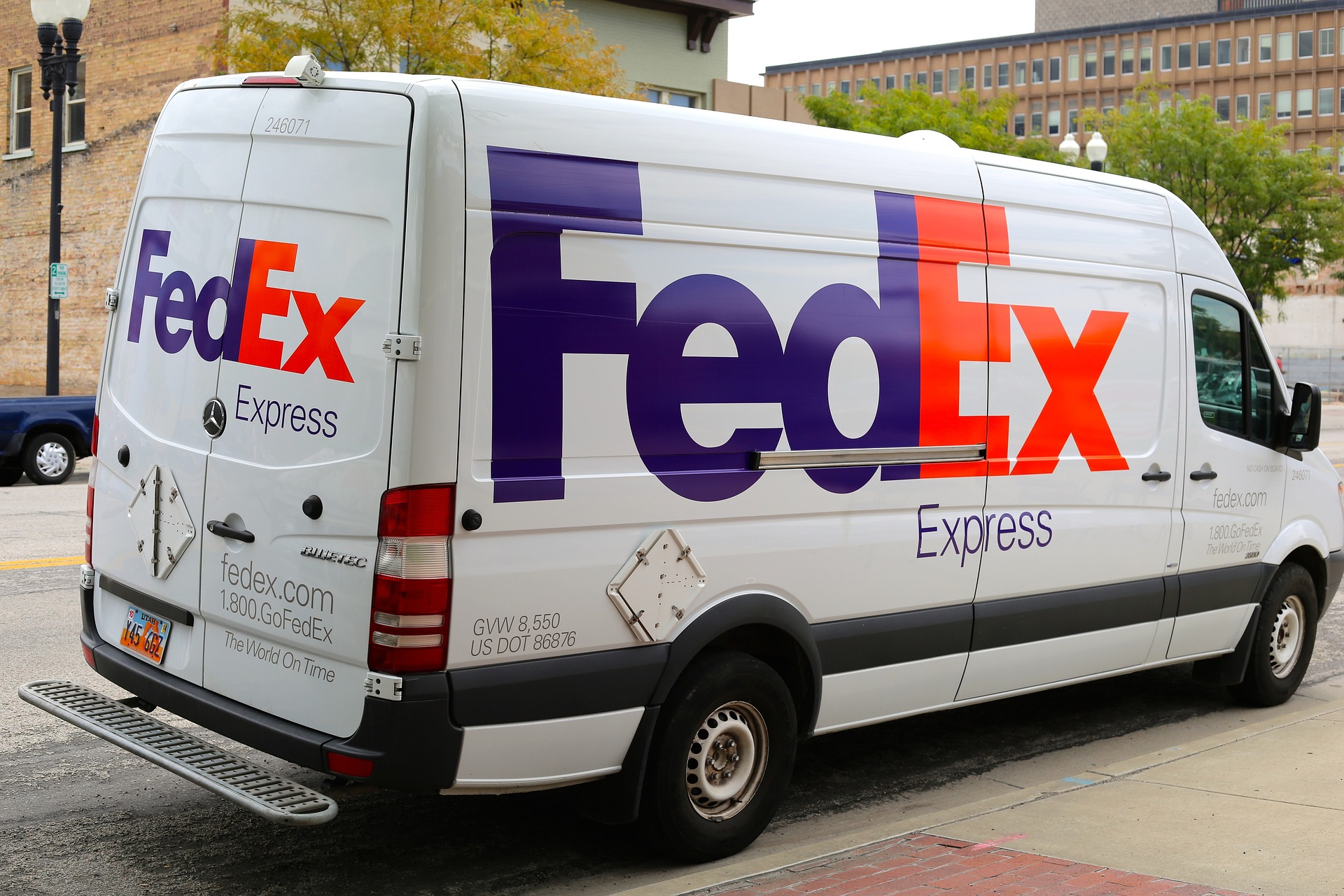
FedEx almost went bankrupt in 1973 when it had only $5,000 left in the bank. The company could not even afford to fuel its planes for the next week. Frederick Smith, the man who started it all, took that last bit of money to a blackjack table in Las Vegas to save his dream.
The short answer is that FedEx survived because its founder refused to quit when things looked impossible. He turned $5,000 into $27,000 in one night at a casino. This small win bought the company a few more days, which was just enough time to find more investors. Today, we see those white and purple trucks everywhere, but the whole business nearly died before it even truly began.
The bold idea that everyone thought was crazy
Fred Smith first thought of a global delivery service while he was a student at Yale. He wrote a paper about a system that could ship packages overnight across the whole country. His professor was not impressed at all. In fact, Fred got a very average grade on that paper because the idea seemed too hard to pull off.
Most people at the time thought the post office was good enough. They did not see why anyone would pay extra to get a box in twenty-four hours. Fred did not care about the doubters. He believed that as electronics and computers became popular, businesses would need parts fast. He was right, but being right does not mean things will be easy.
He used his own money and raised millions more to buy a fleet of planes. Starting a business like this takes a lot of cash. You can learn more about the risks of Entrepreneurship and how people build companies from nothing. Fred was betting everything on the hope that speed mattered more than cost.

The day the money ran out
By 1973, FedEx was in deep trouble. The price of jet fuel was going up fast because of a global crisis. The company was losing about one million dollars every single month. No one wanted to lend them more money because they did not see a path to profit yet.
Fred flew to Chicago to ask for a loan, but the answer was a hard no. He sat at the airport waiting for his flight back to the office in Memphis. He knew that when he got back, he would have to tell his staff that the lights were going out. He had $5,000 in the company account and a fuel bill for $24,000 due on Monday. It felt like the end of the road.
Instead of flying home, he hopped on a plane to Las Vegas. It sounds like a movie script, but it really happened. He did not tell his board of directors what he was doing. He just felt that he had to try one last thing to keep the planes in the sky for a few more days.
A gamble that paid off at the table
Fred walked into a casino and sat down at a blackjack table. He took that remaining $5,000 and started playing. If he lost, the company was gone that night. If he won, he might buy himself a little more time to find a real solution.
By the time he left the table, he had turned that money into $27,000. It was not enough to pay off all the debts, but it was enough to pay for jet fuel for one more week. He flew back to Memphis and went back to work. When his partners asked where the money came from, he told them the truth. They were shocked, but they couldn't argue with the results.
This moment shows how much pressure founders face. Sometimes, the difference between a giant brand and a failed project is just one week of sticking it out. You can find more stories about people who beat the odds on our main success blog where we talk about famous lives. Fred used that extra week to convince more people to believe in his vision.
How things started to turn around
After the Vegas win, things did not get easy right away. Fred still had to raise millions more to keep the business going. He spent his days talking to banks and rich investors. He explained that the world was changing and that "overnight" would soon be the standard for everyone.
He focused on making the service perfect. If a customer was promised a package by 10:30 AM, it had to be there. This reliability started to build trust. Big companies began to rely on FedEx for their most important documents. The "hub and spoke" system he created started to work efficiently.
By 1976, just three years after the casino trip, FedEx saw its first profit. It was a small profit of $3.6 million, but it proved the model worked. The company was no longer a joke or a "crazy student project." It was a real player in the world of shipping.
This story reminds me of how science can also take us by surprise with unexpected results. For example, check out The Strange Signal From Space Experts Are Still Trying to Understand to see how persistence leads to new finds. Just like Fred, scientists often have to keep looking when things don't make sense.
Why did FedEx succeed when others failed?
Many delivery companies have come and gone since the 1970s. FedEx stayed because it changed the way we think about time. Before them, waiting a week for a letter was normal. Fred Smith made us impatient, and that impatience built a billion-dollar industry.
He also took care of his people. Even when the company was broke, he tried his best to keep his pilots and drivers paid. This created a loyal team that was willing to work hard during the lean years. They knew their boss was literally gambling his own future to keep them employed.
Today, Fred Smith is seen as a classic Self-made man who built an empire from a simple idea. He did not let a bad grade or a lack of cash stop him. He knew that a big dream requires big risks. Most of us would have walked away when the bank account hit $5,000, but he chose to double down.
What can we learn from the FedEx story?
You might not need to go to Las Vegas to save your career, but you will face moments where you want to quit. The FedEx story teaches us that "no" is often just a temporary state. The bank said no, the professor said no, and the market said no. Fred Smith just waited for the "yes."
It also shows that the details matter. The fuel for those planes was a small detail that could have ended everything. Successful people stay close to the numbers and the reality of their situation. They don't just hope things get better; they take action to make them better.
Next time you see a FedEx plane in the sky, remember that it almost never took off. It stayed in the air because one man decided that $5,000 was enough to change the world. What would you do if you were down to your last few dollars?
Think about your own big goal today. Is there one small step you can take to keep it alive for one more week? Sometimes, staying in the game is the only thing that matters.



0 Comments